Adaptive Runbook Intelligence Platform
A support-automation proof of concept that learns reusable runbooks from execution history.
Tech Stack: Python · ChromaDB · SQLite · Streamlit · MCP · Embeddings
Problem
Repeated support requests can trigger the same retrieval and reasoning even after a successful resolution is already known.
What I built
Built knowledge retrieval, case memory, a runbook library, policy-based routing, feedback tracking, and a fast path for known-good runbooks without LLM calls.
Key decisions
Reuse explicit runbooks: Stored steps can be inspected and routed directly when their history supports reuse. Separate semantic and structured memory: Similarity search finds candidates while counters support lifecycle decisions.
Results
Includes a three-phase benchmark over 20 synthetic support tickets, comparing stateless reasoning, runbook creation, and runbook reuse.
Limitations
The demonstration uses synthetic tickets and simulated MCP actions. It does not establish production incident-resolution performance.
Evidence
The repository includes workflow code, runbook storage, policy logic, a benchmark runner, and documented metrics.
1. Problem Statement
Repeated support requests can trigger the same retrieval and reasoning even after a successful resolution is already known.
2. Real-World Motivation
Reuse validated resolution steps and retain feedback about when a runbook succeeds or fails.
3. System Architecture
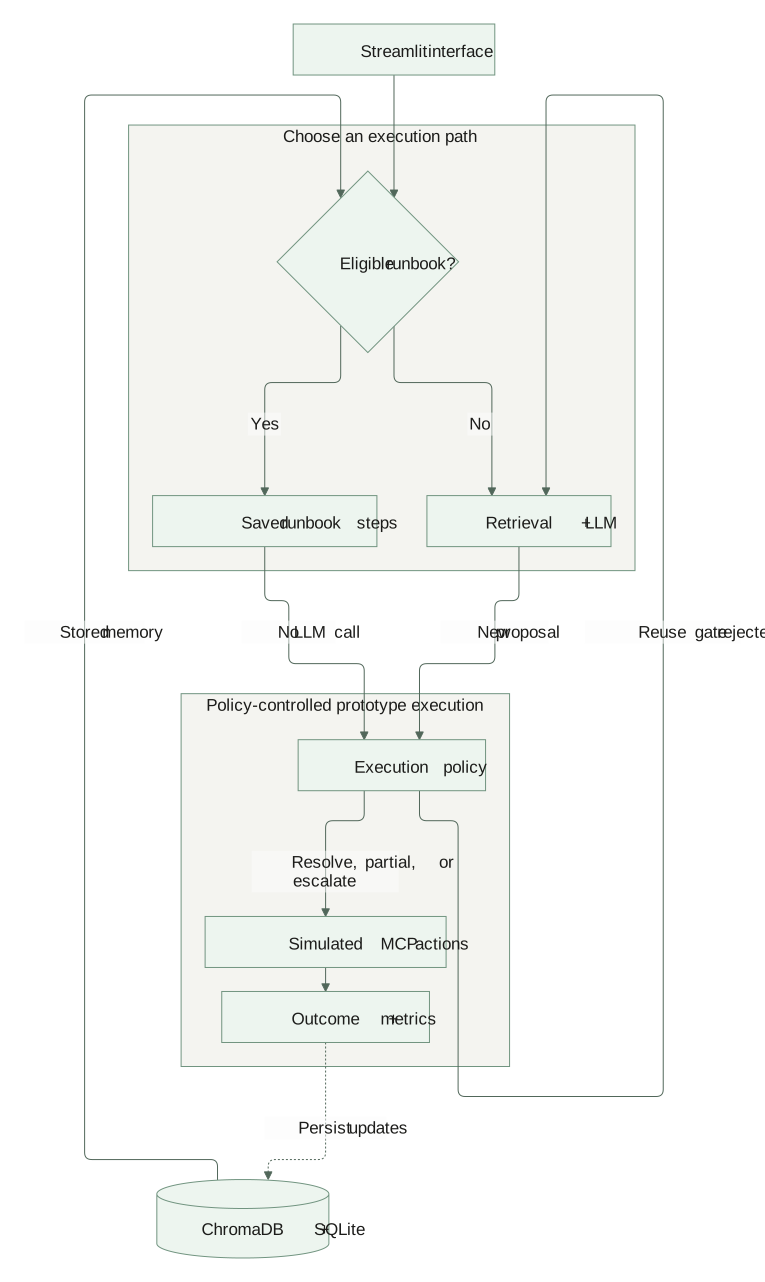
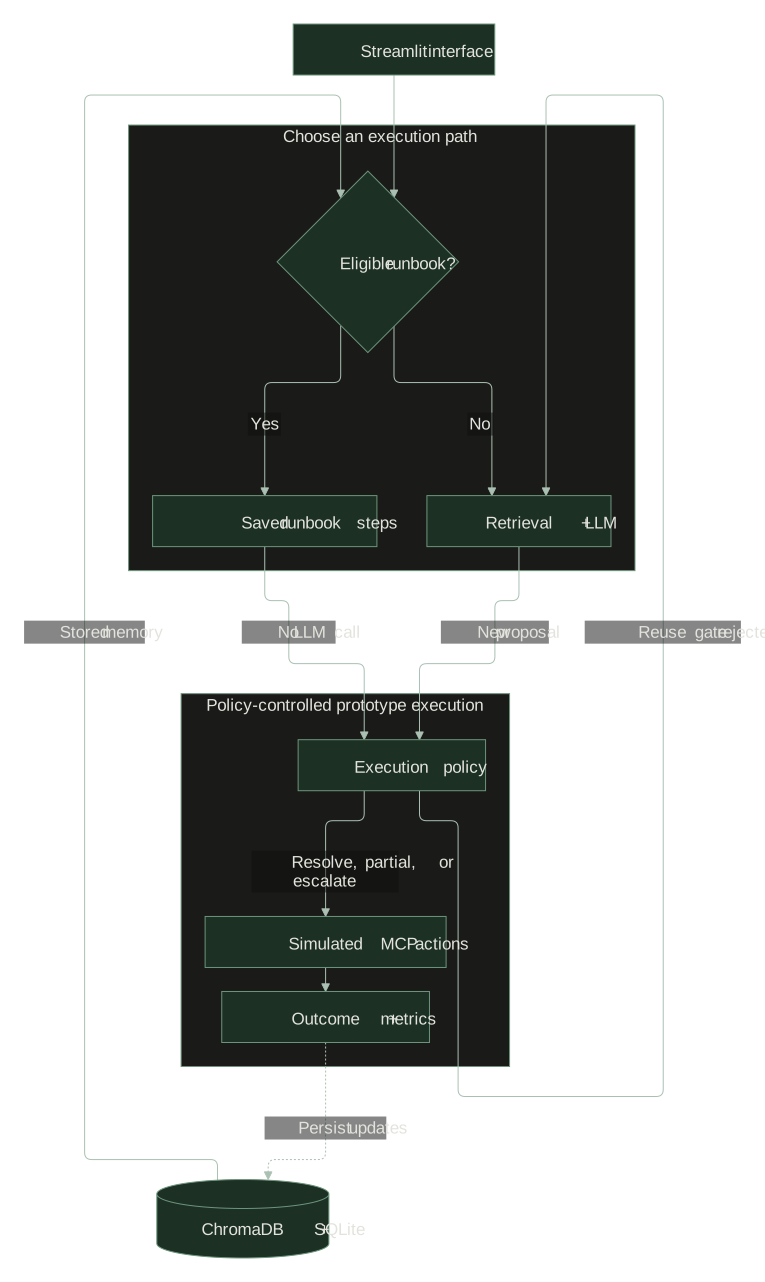
The repository is a local proof of concept. MCP actions are simulated Python functions; enterprise systems are not connected. Dashed arrows show persisted updates, with new candidates and cases created on the exploratory path.
4. Pipeline Data Flow
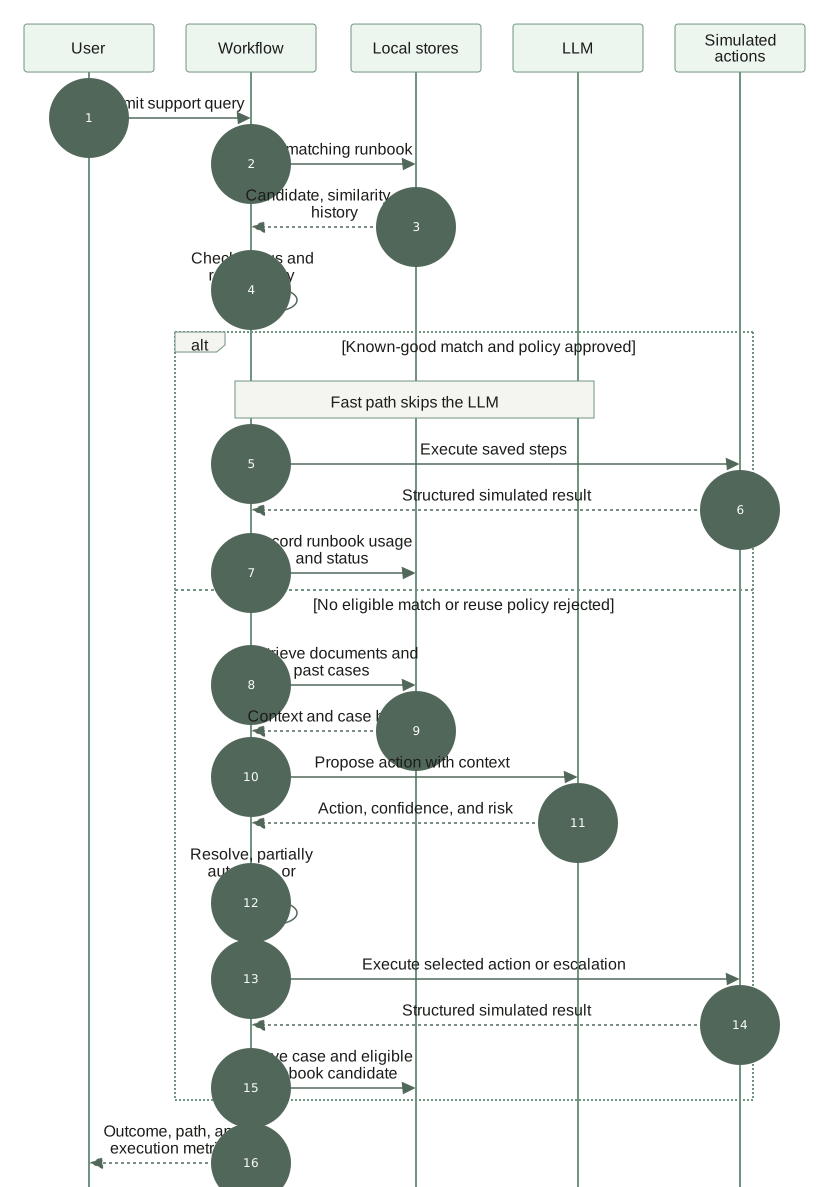
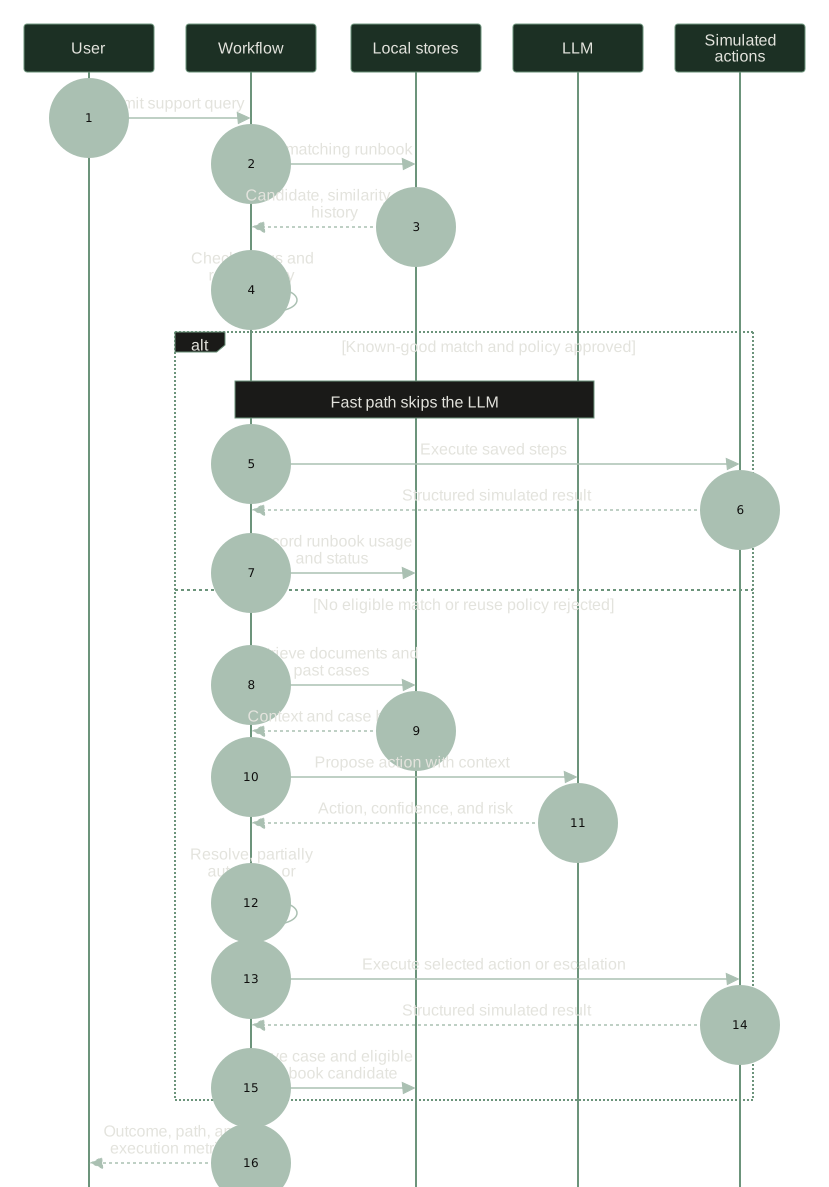
This sequence follows RUNBOOK_AWARE mode. The source requires a known-good match at similarity 0.75 or higher and a reuse policy score of at least 0.55; a rejected reuse gate falls back to exploratory reasoning.
5. Failure Modes & Mitigations
| Scenario | Impact | Mitigation Strategy |
|---|---|---|
| No suitable runbook | A saved resolution cannot be reused confidently. | Route through exploratory retrieval and reasoning. |
| Runbook repeatedly fails or reopens | A previously useful procedure may no longer be reliable. | Update lifecycle counters and exclude known-bad runbooks from matching. |
6. Design Tradeoffs
| Decision | Alternative | Rationale |
|---|---|---|
| Reuse explicit runbooks | Reason from scratch for every request | Stored steps can be inspected and routed directly when their history supports reuse. |
| Separate semantic and structured memory | Store all runbook state in one format | Similarity search finds candidates while counters support lifecycle decisions. |
7. Validation
The benchmark reuses a fixed synthetic ticket set across three phases and includes a repeated-query determinism check.
8. Setup & Delivery
The README documents Python setup, provider configuration, benchmark commands, and Streamlit launch instructions.
Results & Evaluation
- Three phases compare stateless, learning, and reuse behavior.
- Repeated-query checks compare determinism hashes.
Scaling Strategy
The proof of concept uses ChromaDB indexes and SQLite statistics. Distributed operation is not demonstrated.
Security Model
A policy gate evaluates execution eligibility. Benchmark MCP actions are simulated rather than live enterprise changes.
Observability
- Execution metricsTokens, model calls, latency, and escalations.
- Runbook lifecycleSuccesses, failures, reopenings, and reuse status.
Future Roadmap
Further validation would use held-out cases and approved integrations with real operational systems.