Dynamic vs. Fixed K Reranking in RAG
A retrieval experiment comparing fixed context size with relevance-based dynamic document selection.
Tech Stack: Python · Sentence Transformers · FAISS · Cross-Encoder · Jupyter
Problem
A fixed document count can add irrelevant context for simple queries or omit context for broader queries.
What I built
Built a notebook comparison using embeddings, FAISS retrieval, cross-encoder reranking, and fixed versus score-based dynamic context selection.
Key decisions
Select by relative reranker score: Context size follows relevance but becomes sensitive to the selection threshold. Evaluate retrieval independently: Context metrics isolate the effect of document selection.
Results
In the documented synthetic experiment, mean context word count fell from 125.17 to 13.00 while answer presence in context remained 1.00 for both methods.
Limitations
Uses 100 synthetic documents and 30 queries. The notebook uses word count as a token-cost proxy; answer presence measures retrieved context, not generated-answer correctness.
Evidence
The repository contains the comparison notebook, experiment design, evaluation definitions, and aggregate results.
1. Problem Statement
A fixed document count can add irrelevant context for simple queries or omit context for broader queries.
2. Real-World Motivation
Compare selection strategies by measuring both context quality and the amount of text selected.
3. System Architecture
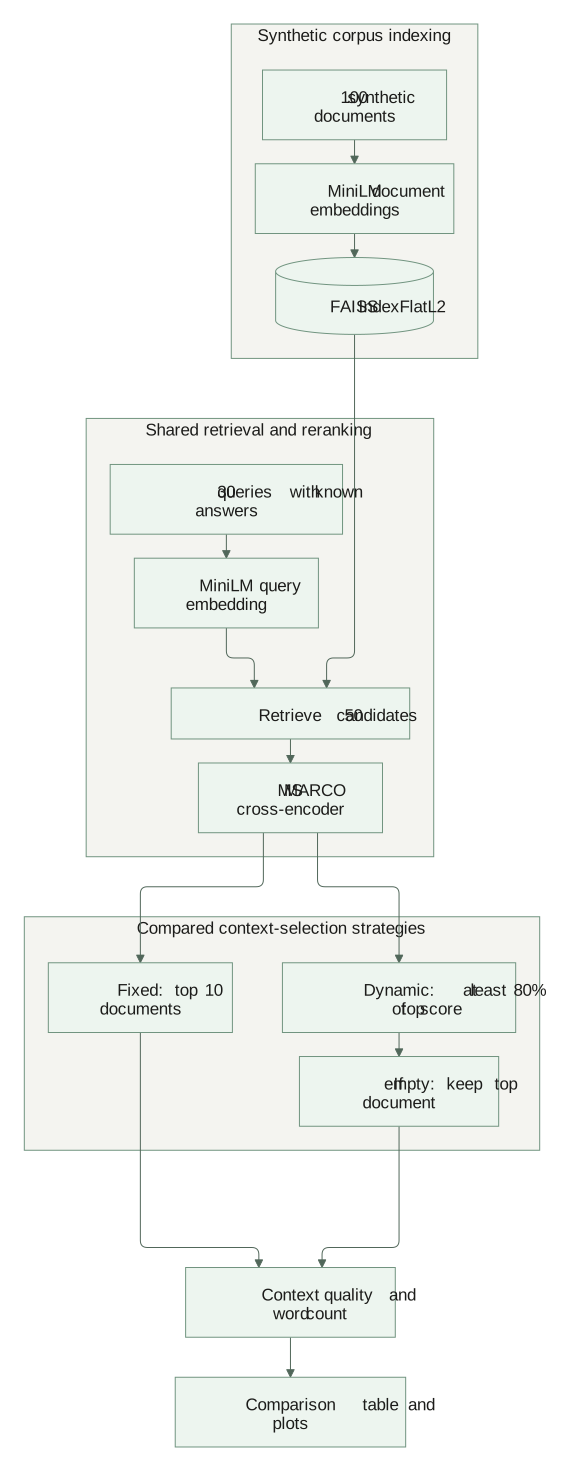
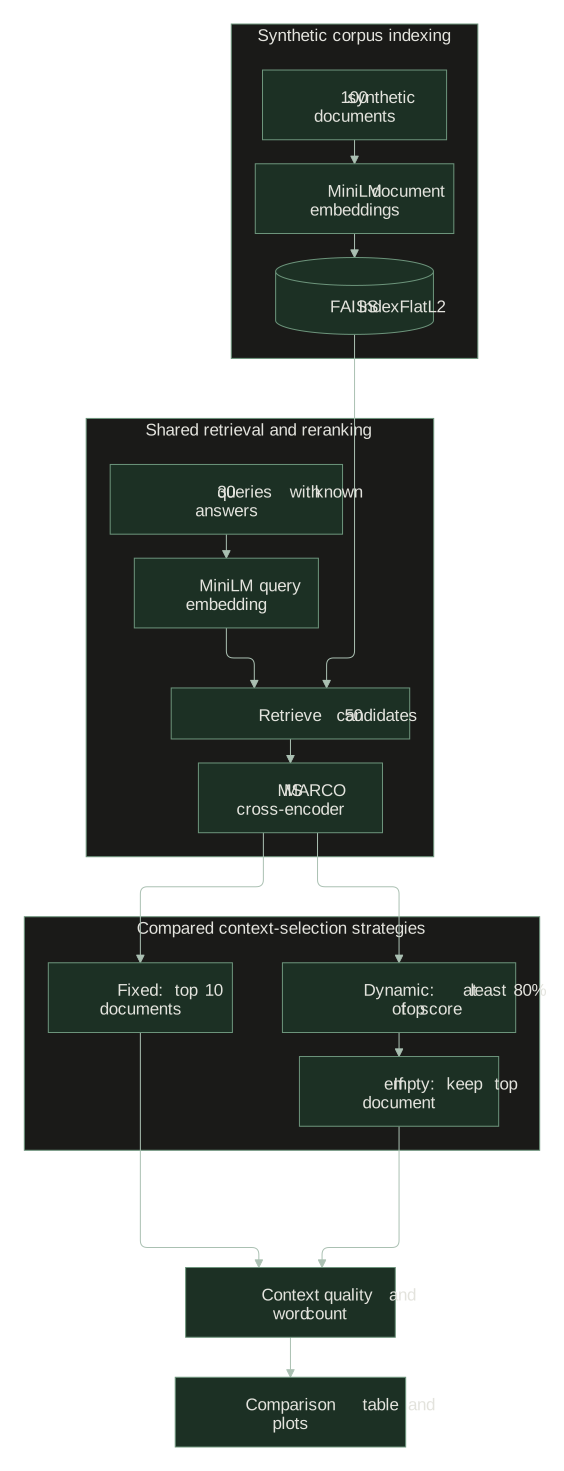
Both strategies retrieve and rerank 50 candidates from 100 synthetic documents. Evaluation checks known-answer presence in selected text; the notebook does not call an LLM to generate answers. Its token-cost proxy is a whitespace word count.
4. Pipeline Data Flow
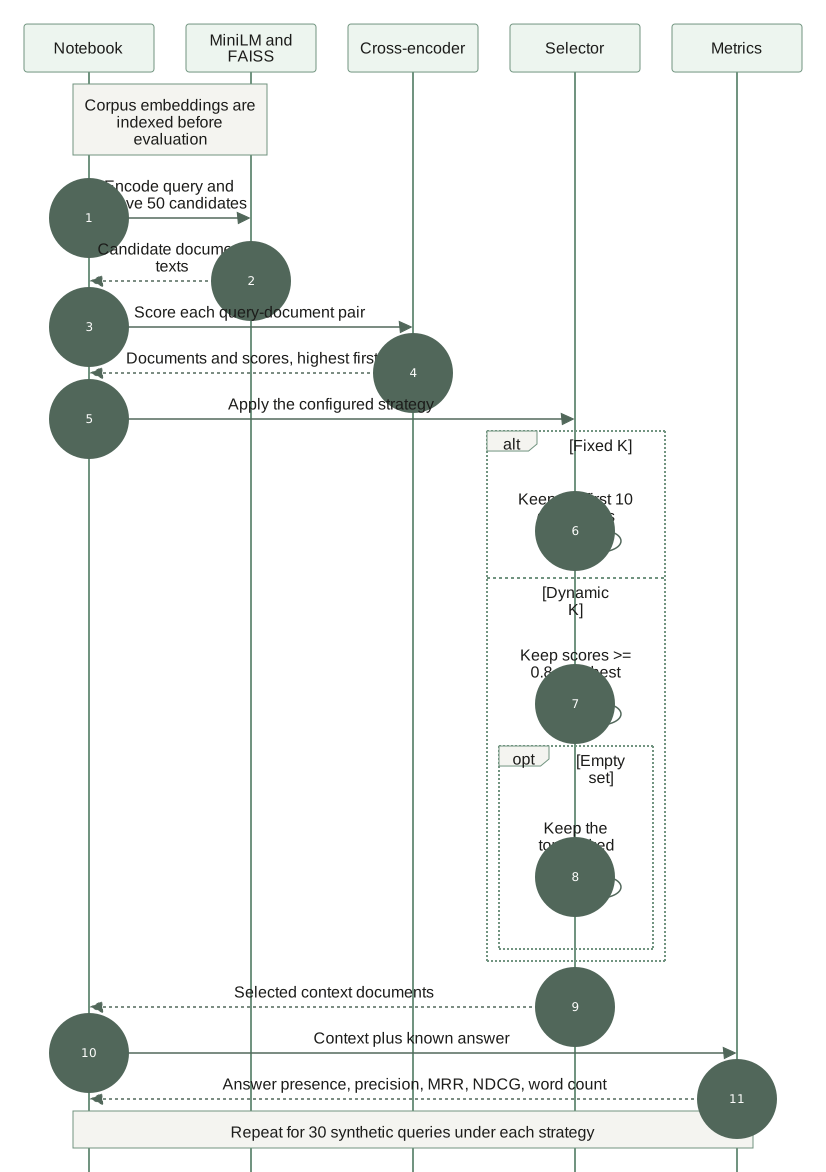
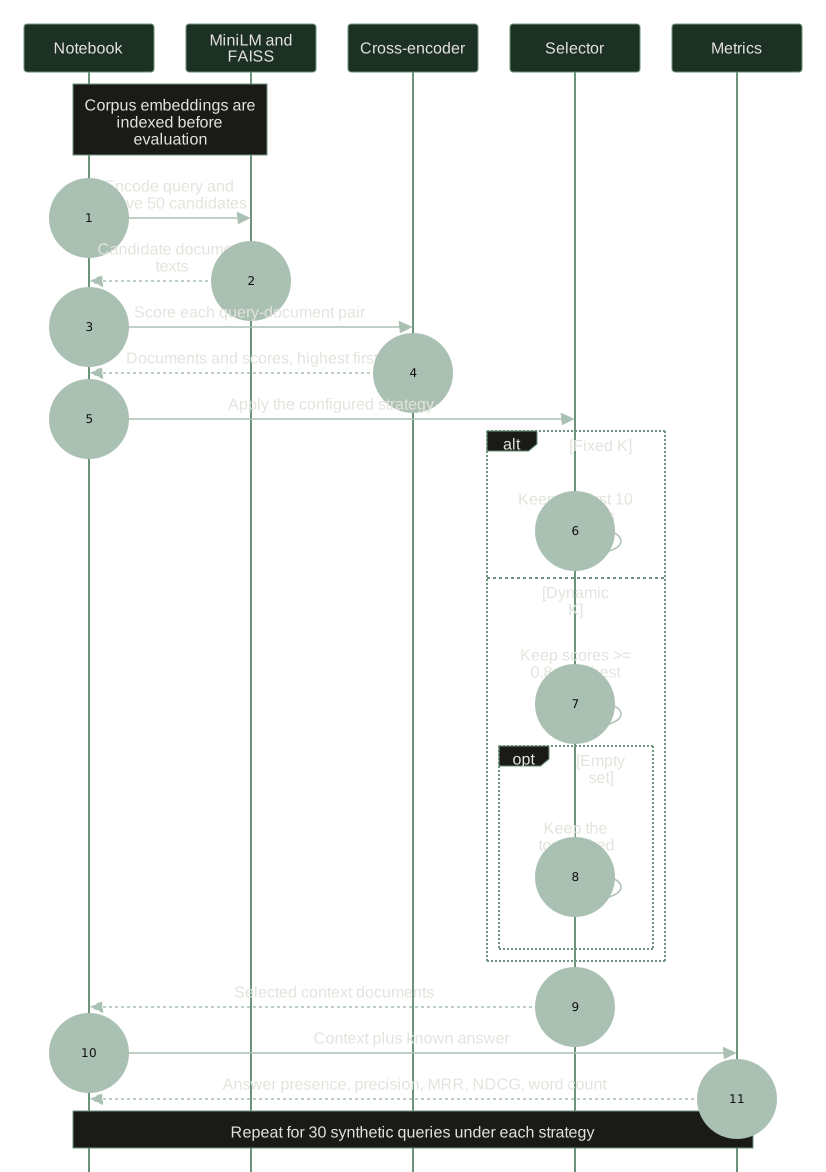
Fixed selection keeps 10 documents. Dynamic selection uses 80% of the highest raw cross-encoder score, with a top-one fallback if nothing passes. The same 30 labeled synthetic queries drive both evaluations.
5. Failure Modes & Mitigations
| Scenario | Impact | Mitigation Strategy |
|---|---|---|
| Threshold discards useful context | Selection could omit information needed for an answer. | Compare answer presence, ranking metrics, and context precision. |
| Synthetic results do not generalize | Gains may differ on real document collections. | Keep dataset scope explicit and validate separately on new corpora. |
6. Design Tradeoffs
| Decision | Alternative | Rationale |
|---|---|---|
| Select by relative reranker score | Always keep a fixed document count | Context size follows relevance but becomes sensitive to the selection threshold. |
| Evaluate retrieval independently | Judge only final generated answers | Context metrics isolate the effect of document selection. |
7. Validation
Both strategies are compared on the same synthetic documents and queries with known answers.
8. Setup & Delivery
The project provides a notebook and README with setup and execution instructions.
Results & Evaluation
- Precision: 0.11 fixed K; 0.98 dynamic K.
- Average selected documents: 10.00 fixed K; 1.03 dynamic K.
- Average context word count: 125.17 fixed K; 13.00 dynamic K.
Scaling Strategy
The notebook uses a small synthetic corpus and FAISS IndexFlatL2. Large-corpus throughput is outside the measured experiment.
Security Model
The experiment uses synthetic documents. Enterprise document permissions and tenant isolation are outside its scope.
Observability
- Context qualityAnswer presence, precision, MRR, and NDCG.
- Context sizeSelected document count and whitespace-delimited word count.
Future Roadmap
Further evaluation would use real corpora, additional query types, and generated-answer measurements.