Ticketless IT/HR Voice Support
A voice and screen support prototype combining enterprise retrieval, guided actions, and human approval.
Tech Stack: Speech Recognition · WebSockets · VLM/OCR · RAG · LangGraph
Problem
Support requests often need both a spoken description and the context visible on an employee's screen.
What I built
Built speech recognition, WebSocket voice interactions, VLM/OCR screen understanding, enterprise RAG, and LangGraph orchestration with human approval and structured verification before closure.
Key decisions
Use voice and screen context: Screen understanding can supply context that a spoken description leaves out. Keep human approval: The user participates before actions are accepted and the request is closed.
Results
Implemented a combined voice-and-screen support workflow. No quantitative performance result is claimed for this prototype.
Limitations
An IT/HR support prototype; production deployment and a measured reliability benchmark are not established by this project summary.
Evidence
Implementation summary follows my resume. The supplied project repository is linked above; public access is currently unavailable.
1. Problem Statement
Support requests often need both a spoken description and the context visible on an employee's screen.
2. Real-World Motivation
Bring voice, screen context, and enterprise knowledge into one guided support workflow.
3. System Architecture
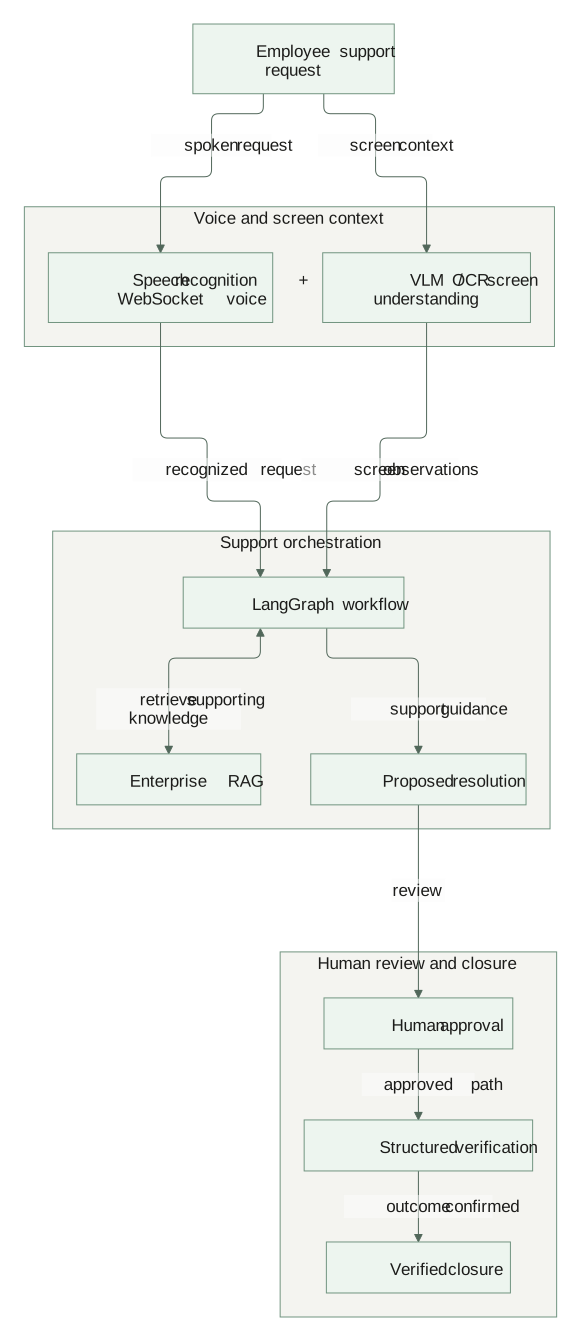
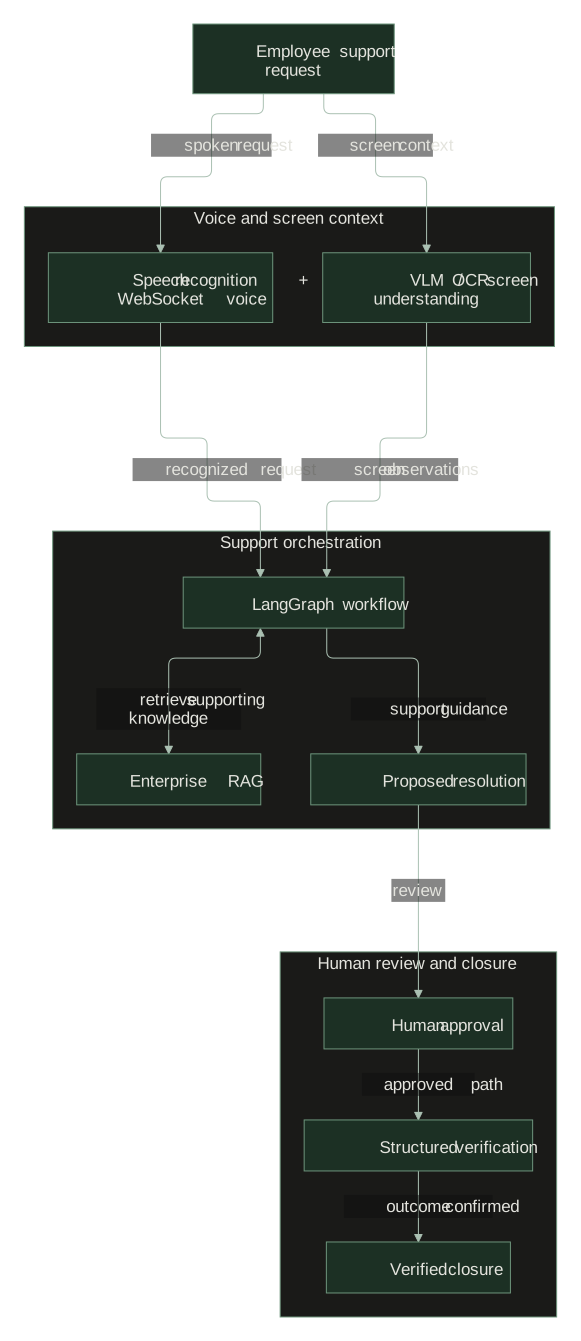
Conceptual view of the prototype capabilities described in my resume. The repository could not be inspected, so component boundaries are illustrative; providers, storage, and deployment are unspecified.
4. Pipeline Data Flow
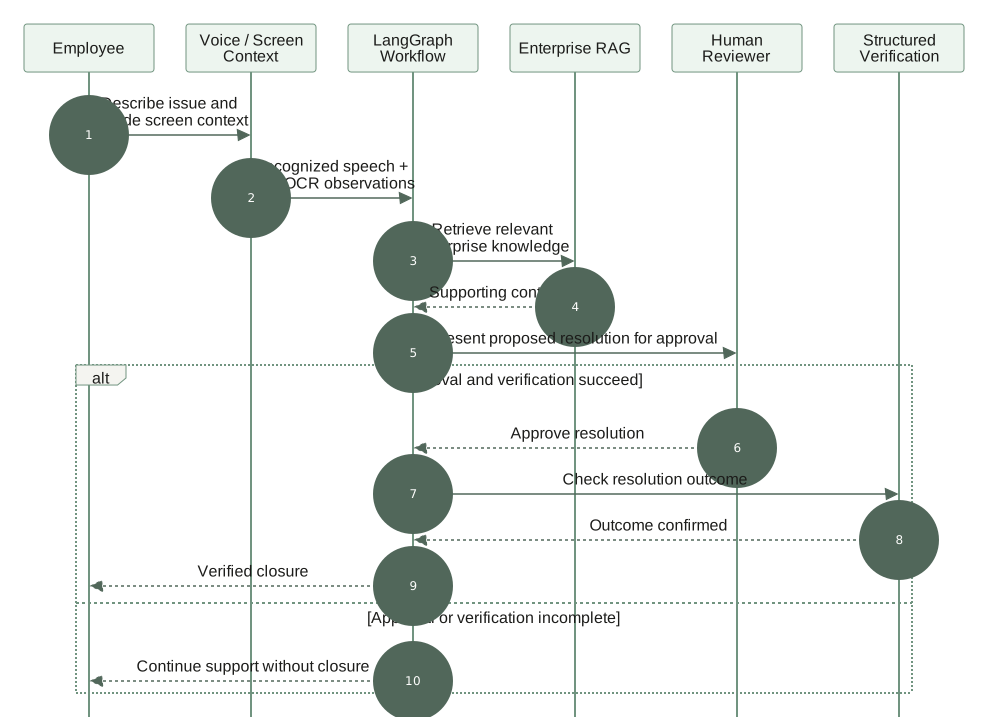
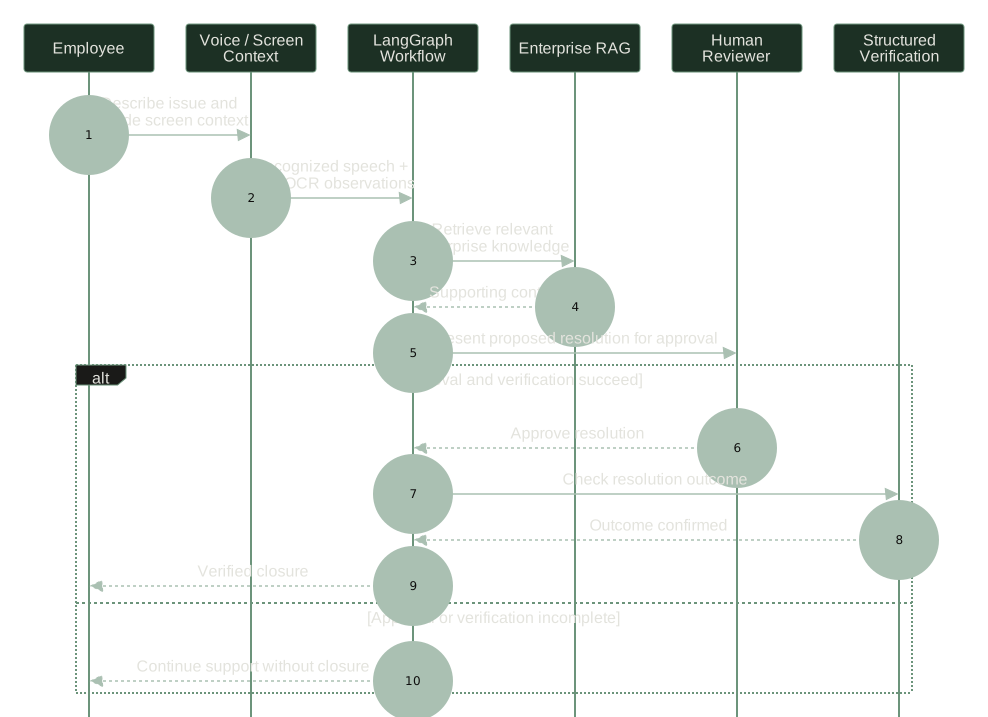
Derived from the author's resume rather than inspected source code. This sequence communicates the described prototype capabilities, not a verified runtime trace or exact API contract.
5. Failure Modes & Mitigations
| Scenario | Impact | Mitigation Strategy |
|---|---|---|
| Incomplete voice or screen interpretation | The workflow may lack enough context to resolve the request. | Human review and structured verification provide a check before closure. |
| An action needs approval | Execution requires a human decision. | Keep human approval in the support workflow. |
6. Design Tradeoffs
| Decision | Alternative | Rationale |
|---|---|---|
| Use voice and screen context | Text-only support requests | Screen understanding can supply context that a spoken description leaves out. |
| Keep human approval | Fully autonomous support actions | The user participates before actions are accepted and the request is closed. |
7. Validation
Structured verification is built into the workflow. A separate test-suite or benchmark report was not supplied for this entry.
8. Setup & Delivery
The project repository is linked for source access; public setup and deployment documentation could not be verified.
Results & Evaluation
- Combines speech, screen understanding, and enterprise retrieval.
- Approval and verification precede support closure.
Scaling Strategy
WebSockets carry interactive voice traffic. Concurrent-session capacity has not been reported for this prototype.
Security Model
Human approval is part of the action flow, and structured verification precedes closure. Production security validation is outside the documented scope.
Observability
- Workflow outcomeStructured verification before closure.
- Approval stateHuman participation in the resolution flow.
Future Roadmap
Further work would document reproducible support scenarios, latency measurements, and deployment requirements.